Grand hotels and considered hospitality in Shanghai
Shanghai’s grand hotels offer more than an elegant place to stay: they open onto a city shaped by changing architecture, international exchange and layers of lived history. This guide explores how to appreciate that heritage, understand the Bund’s urban setting and plan a hotel experience around verified details rather than assumptions.
Shanghai’s grand hotels reflect a city whose buildings and uses have changed over time.
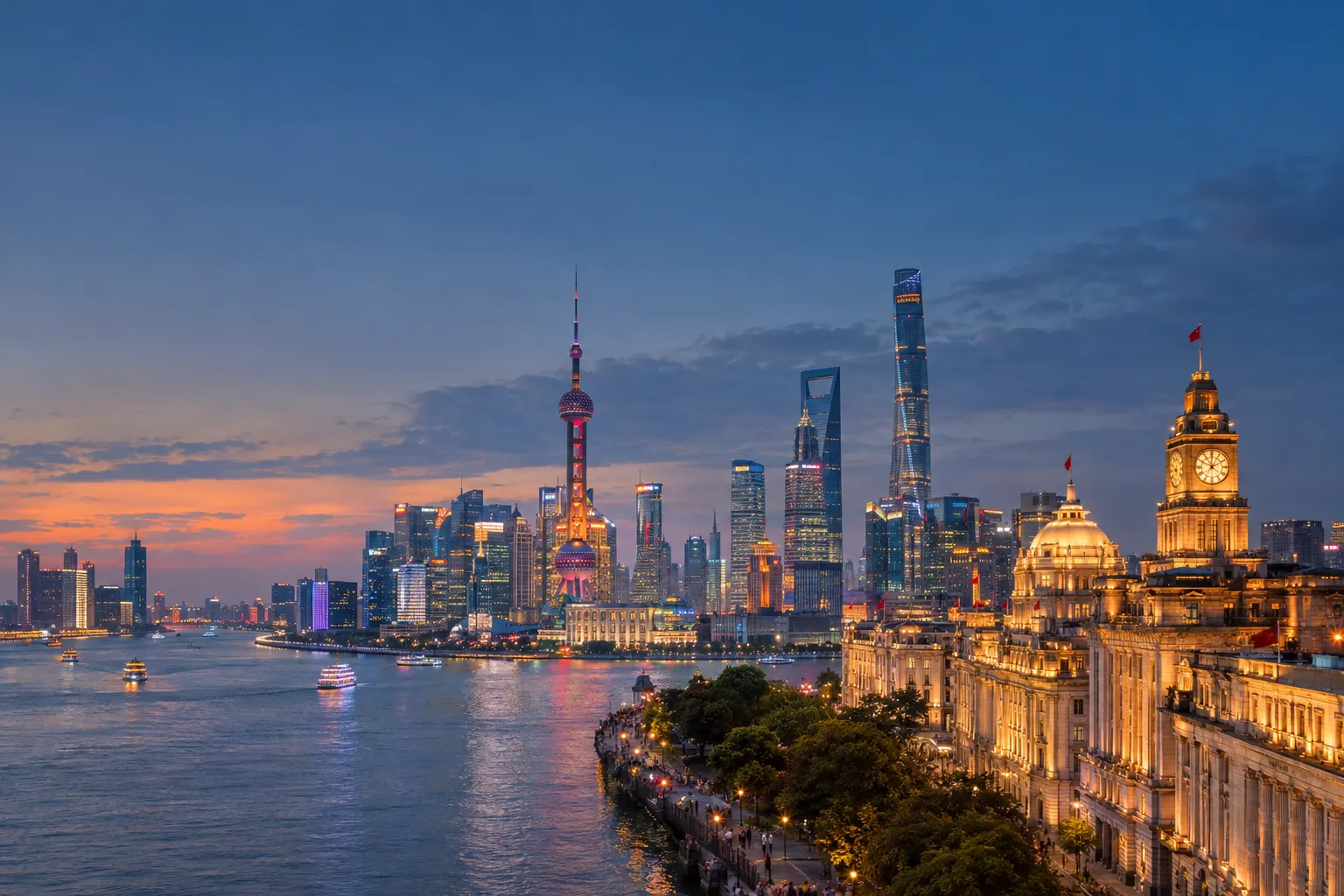
The Bund is a 1.5-kilometre historic waterfront district with 52 buildings cited by the city’s official visitor guide; it is a public urban setting, not a hotel amenity.
Length of the Bund waterfront district described by Shanghai’s official visitor guide
1.5 km
Historic buildings cited in the official Bund visitor guide
52
Architectural influences noted in the Bund heritage district
Baroque, Gothic and Ancient Greek
Required for the complimentary guided heritage tours for registered guests described by Fairmont Peace Hotel; subject to availability
Advance reservation
Context
How Shanghai’s grand hotels carry the city’s history
Shanghai’s hotel history is best approached as part of the city’s broader story of changing buildings, districts and uses.
A hotel stay as a way into Shanghai
Shanghai’s grand hotels are more than impressive façades. They offer a way to read the city: through its changing relationship with international travel, commerce, architecture and public life. A stay in a historic building can make those shifts tangible, but the experience depends on more than age or scale. It is shaped by how a hotel uses its setting, interprets its past and gives guests a comfortable connection to the present-day city.
For a visitor, the appeal is therefore both practical and cultural. A well-chosen hotel can provide a calm base between neighbourhood walks, museums and meals, while its own architecture and stories add another layer to the itinerary. The most considered approach is not to treat heritage as a decorative backdrop. It is to notice what the building says about Shanghai, distinguish documented history from romantic legend, and plan around the access and arrangements that are actually offered.
Heritage is a changing story, not a frozen image
The idea of the grand hotel belongs to Shanghai’s history as a city shaped by movement and exchange. Over time, buildings and properties have changed use along with the city. Some historic places continue as hotels; others have become museums or serve different purposes. That distinction matters when planning a visit: an evocative historic name or address does not by itself mean that a building currently operates as accommodation.
Check whether a property is currently operating as a hotel before treating it as a place to stay.
Use official heritage and hotel sources to separate a building’s past from its present use.
Approach stories about former residents, famous guests or landmark events cautiously unless a reliable source documents them.
Place
The Bund and the meaning of location
The Bund connects individual buildings to a wider urban setting, making it a natural point of reference for a heritage-minded hotel stay.
The Bund: architecture in a public setting
The Bund offers one of the clearest settings for considering how architecture contributes to a hotel’s sense of place. Shanghai’s official visitor guide describes the waterfront historic district as a 1.5-kilometre stretch with 52 historic buildings. Its architectural character includes a range of styles, and the public promenade provides a changing view of the riverfront and the city across it.
This is a useful context for hotel guests, but the distinction between neighbourhood and property should remain clear. The Bund is a public urban district; it is not a hotel facility, nor does staying nearby imply private access to buildings or waterfront areas. Its appeal lies in being able to encounter the city’s architecture at street level, then return to a hotel whose own setting and history can be considered in relation to that wider scene.
Reading the waterfront at a human pace
A walk along the Bund can be read as a sequence rather than a checklist. Look at the scale of the buildings, the variety of façades and the way the riverfront frames the city. In daylight, architectural details and the district’s breadth may be easier to appreciate. At night, the official visitor guide notes that the waterfront takes on a different character as the illuminated skyline becomes part of the view. Conditions, crowd levels and access can vary, so check current local guidance before setting out.
Allow time to pause and observe rather than trying to identify every building in one visit.
Treat the promenade as a public place and follow local signs and access guidance.
If architecture is a priority, consider returning at a different time of day for a changed perspective.
Design
Architecture, atmosphere and the guest experience
The character of a grand hotel comes from the relationship between historic fabric and the requirements of a functioning place to stay.
Architecture that works as part of the stay
A hotel’s architecture is not simply a backdrop for photographs. It can shape how a guest moves through a building: the approach from the street, the transition from public areas to quieter spaces, and the relationship between interior rooms and the surrounding district. In a historic property, those elements may preserve a sense of another period while the hotel continues to serve contemporary needs.
The most rewarding details are often not the grandest. Proportion, material, light and the way a building meets its street can be more revealing than a single ornate feature. The city’s official heritage account describes the Bund district as containing varied architectural influences, including Baroque, Gothic and Ancient Greek styles. That variety is a reminder not to reduce Shanghai’s historic architecture to one look or one era.
What to look for beyond a grand façade
When choosing a hotel, consider whether the historic character is integral to the experience or simply part of the address. A property’s official account can explain what has been retained, what has changed and which heritage experiences are available. This is more useful than relying on broad labels such as “historic” or “landmark,” which can conceal important differences between buildings and their current uses.
Look for a clear account of the building’s history and current function.
Check whether described rooms, spaces or tours are part of the guest experience or only visible from public areas.
Read current property information for access arrangements before building an itinerary around a particular feature.
Hospitality
What considered hospitality looks like in practice
A thoughtful hotel makes its story legible while being precise about the experiences and access it actually provides.
Interpretation that adds meaning
Considered hospitality is attentive without making a performance of attention. In a heritage hotel, that can mean helping guests understand the building and its district while keeping the stay comfortable and straightforward. The best interpretation gives context rather than simply presenting a nostalgic image: it explains what is known, acknowledges how a property has changed and makes clear which experiences are available to whom.
An example is the Peace Museum at Fairmont Peace Hotel. The hotel’s official information describes an exhibition about the former Cathay Hotel, with historical material and artefacts. Its heritage-tour arrangements distinguish between registered hotel guests and other visitors; the complimentary guided tours described for registered guests require advance reservation and are subject to availability. Other visitor arrangements are also described by the hotel. These details are specific to this property and should not be assumed to apply elsewhere.
Guest access: verify the details
That distinction between a public-facing heritage experience and an arrangement for registered guests is important for planning. A hotel’s history may be compelling even when a particular tour, room or space is not included in every stay. Check the property’s current official information for eligibility, reservation requirements and availability, and avoid relying on older travel descriptions for present-day arrangements.
Confirm current tour access directly with the hotel before making it a fixed part of your plans.
Check whether advance reservation is required and whether access depends on guest status or availability.
Do not assume that a hotel’s historic interiors or collections are open to all visitors.
Planning
Planning a stay around place and pace
A considered stay is built around location, pace and verified practical information rather than a packed list of supposed hotel privileges.
Let the neighbourhood shape the itinerary
The hotel’s address shapes the rhythm of a Shanghai visit. A Bund stay puts the historic waterfront close at hand; a property elsewhere may offer a different relationship to gardens, residential streets or the city’s commercial life. Neither is automatically the better choice. The question is what kind of days the visitor wants to have and how much time they wish to spend crossing the city.
A useful way to plan is to group activities by district rather than treating every landmark as a quick stop. Give the Bund enough time for an unhurried walk, and leave room for a museum or another neighbourhood experience rather than packing every day with distant destinations. The official visitor information is a helpful starting point for understanding the area, but current access and local conditions should be checked close to travel.
Choose a location in relation to the places you genuinely want to visit, not just the hotel’s historic name.
Allow unstructured time around walks and meals; a city stay need not be a sequence of fixed appointments.
Verify current opening and access details for any specific venue before travelling there.
A measured plan for a short visit
For visitors with a limited stay, a simple structure can make the hotel feel like part of the experience rather than a place to sleep between excursions. Begin with the immediate district, then add one or two activities that offer a different perspective on the city. Return to the hotel with time to notice its public spaces and surroundings, while respecting any access rules. This approach favours depth over an overfilled schedule and leaves room for plans to change.
A practical lens
How to assess a heritage hotel claim
A few distinctions help visitors appreciate Shanghai’s hotel heritage without confusing historical reputation with present-day arrangements.
Separate history, current use and access
The term “grand hotel” can invite expectations of a single, standardised experience. In reality, Shanghai’s historic properties differ in their architecture, present-day use and interpretation of the past. Some former hotels are no longer hotels at all. Some sites offer specific heritage experiences; others may be better appreciated from the street or through district-level history. Each claim needs to be checked at the level of the individual property.
A useful reading habit is to separate three questions: what is the building’s documented history, what can a visitor access now, and what is the hotel currently offering to its guests? Official sources are the right place to verify current arrangements, especially where tours, reservations or guest eligibility are concerned. This care does not diminish the romance of a historic stay. It makes the experience more grounded and avoids confusing a building’s former life with its present one.
A historic building is not necessarily an operating hotel.
A hotel’s heritage story does not establish that every historic space is open to guests.
Tour details and access rules can be property-specific and may change.
Read hotel stories with care
Photographs can also flatten a complex place into a single familiar view. Use them as an invitation to look more closely, not as evidence of exclusive access or a complete account of the property. Where a hotel describes its own collection, museum or tour, treat that description as the source for those arrangements and confirm it remains current before visiting.
Conclusion
A thoughtful conclusion to Shanghai’s hotel story
The appeal of Shanghai’s grand hotels rests on their connection to a city that is historic, lived-in and still changing.
A stay connected to the city
Grand hotels can make Shanghai’s history feel immediate, but their significance is not contained within their walls. The Bund’s buildings, the public waterfront and the changing uses of historic properties all point to a city that continues to reinterpret its past. A thoughtful stay brings those strands together: the hotel is a point of rest, an architectural encounter and one part of a larger urban story.
Choose a property for the experience it can genuinely offer now, not solely for a legendary reputation. Read its history, confirm its current arrangements, and give its neighbourhood time to reveal itself. That is the quieter measure of considered hospitality: a stay that is attentive to place, clear about what is available and open to the city beyond the hotel entrance.
The lasting value of a considered stay
In Shanghai, the most memorable hotel experience may be the one that leaves space for observation. Architecture becomes more than scenery when it is understood in context; hospitality becomes more than ceremony when it helps a visitor feel oriented. Together, they offer a way to encounter the city with curiosity and care.
Questions answered
Shanghai s grand hotels FAQs
Is every historic Shanghai hotel building still operating as a hotel?
No. Shanghai’s official heritage guide notes that the Astor House building is now the China Securities Museum. Check a property’s current official information before treating a historic address as accommodation.
What is the Bund and how large is its historic waterfront district?
Shanghai’s official visitor guide describes the Bund as a 1.5-kilometre waterfront historic district with 52 historic buildings.
Can visitors join the Peace Museum heritage tour at Fairmont Peace Hotel?
The hotel’s official information says its complimentary guided heritage tours are for registered hotel guests, require advance reservation and are subject to availability. Check the hotel’s current information for other visitor arrangements.
Does staying near the Bund provide private access to the waterfront or historic buildings?
No. The Bund is a public urban district; a nearby hotel stay does not imply private access to public areas or other buildings.
Essential cookies keep the site and booking form working. Choose whether to allow Google Analytics or Google Ads measurement. We remember your choices for up to 180 days.

 London Direct Chauffeurs