Travel and culture

A considered slow-travel itinerary for Mumbai and Jaipur

Mumbai and Jaipur are not a pair to rush through. One is a coastal metropolis shaped by architectural contrasts and urban movement; the other is a planned historic capital whose palaces, streets and gardens reward a slower look. This considered itinerary gives each city its own rhythm, with time for landmark visits, cultural context and the practical pauses that make a journey feel like travel rather than a checklist.

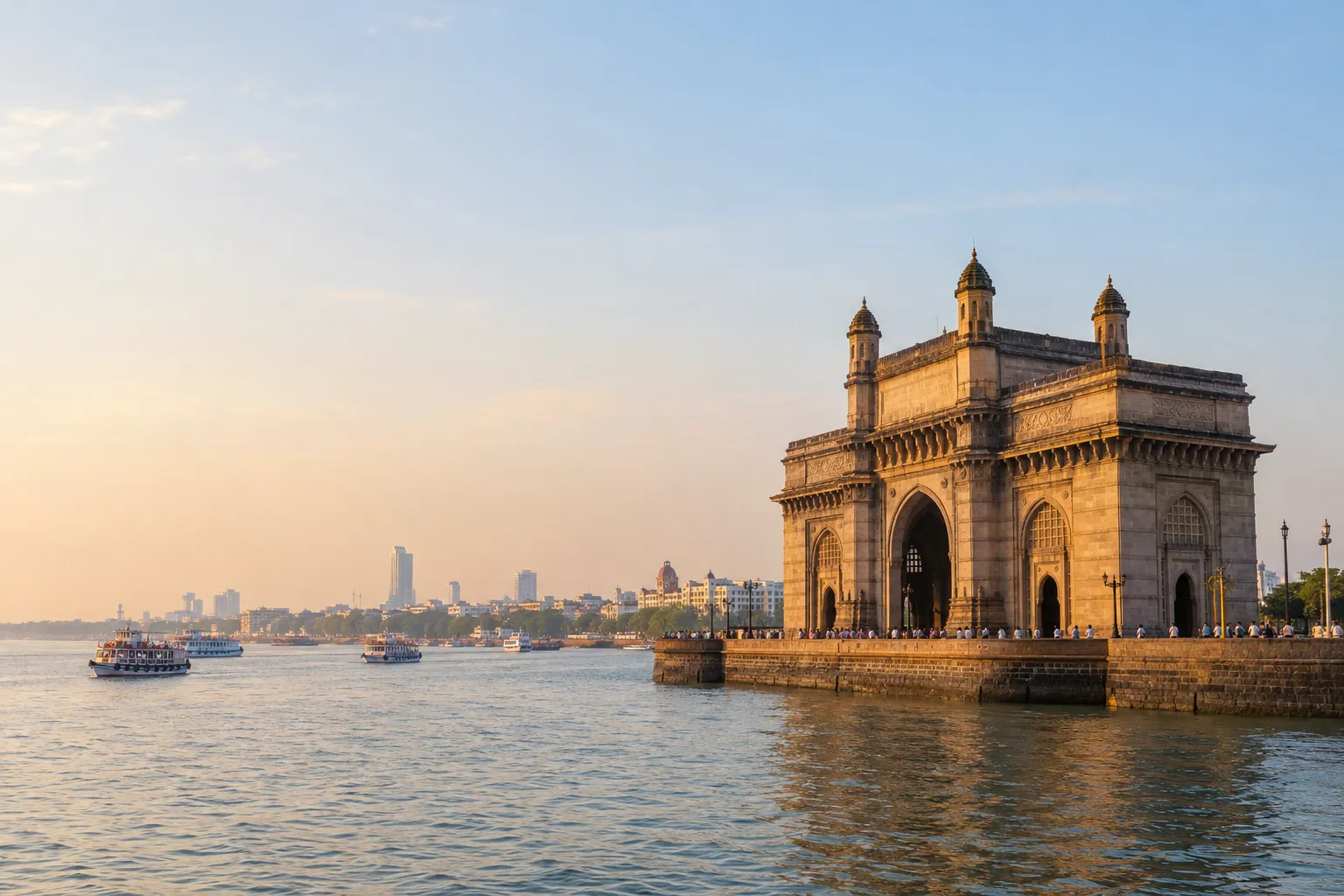
The Gateway of India on Mumbai’s waterfront in soft morning light
Article overview

The short version

Plan Mumbai and Jaipur as two distinct city stays, not one compressed sightseeing circuit.

In Mumbai, explore the waterfront and Victorian Gothic and Art Deco architectural context at an unhurried pace; verify access before entering individual buildings or planning excursions such as Elephanta Caves.

Year Jaipur was founded, as described by Rajasthan Tourism
1727
Amber Palace Fort’s distance from central Jaipur, according to Rajasthan Tourism
About 11 km
Victorian Gothic and Art Deco Ensembles of Mumbai
UNESCO World Heritage property
Current opening and access details can change
Check before visiting
A city-by-city itinerary

A considered sequence for two contrasting cities

The following structure leaves the exact number of nights open because the right pace depends on your wider journey. Think in terms of broad day themes rather than a rigid hour-by-hour schedule. In both cities, group nearby experiences, confirm current arrangements and protect stretches of unplanned time.

A slower way to experience Mumbai and Jaipur

Mumbai and Jaipur reward different kinds of attention. Mumbai is a coastal metropolis whose layers are read through architecture, street life and the changing character of its neighbourhoods. Jaipur, founded in 1727, presents a more legible historic plan, with palaces, gateways and civic spaces set against the wider rhythms of a modern state capital. A considered itinerary does not try to make the cities interchangeable. It gives each one its own tempo.

The aim is not to see everything. It is to choose a small number of meaningful encounters and leave room around them: time for a long look at a façade, a meal without a timetable, or a return to a place whose first impression was incomplete. A slow itinerary is therefore less a fixed sequence than a way of travelling. It favours a few well-chosen anchors over a day crowded with distant stops.

There is no single required direction between the cities. Decide the order according to your wider travel arrangements and the time available, then keep the city visits themselves unhurried. The outline below works as a framework, not as a packaged tour or a promise of access. Check current travel arrangements and venue information before relying on any suggested sequence.

Begin in Mumbai with a sense of place

Mumbai’s scale can tempt visitors into crossing the city repeatedly to collect famous sights. Instead, group experiences by area and mood. One day might focus on the historic centre and the seafront; another can be devoted to a museum, a neighbourhood or a slower return to a place that caught your attention. Allow extra time between plans: movement through a large city is part of the day, not a blank interval that can always be compressed.

The Gateway of India is a natural point of reference, but it need not become the whole story. The nearby waterfront and the city’s architectural history can help orient a first visit. The Government of India’s Incredible India guide also identifies Elephanta Caves, Kala Ghoda, Marine Drive and Chhatrapati Shivaji Maharaj Terminus as part of Mumbai’s visitor landscape. Treat these as options rather than a checklist. Elephanta, in particular, is better considered as a substantial outing than a quick stop squeezed between other appointments; check current access and arrangements before planning it.

For a first day, keep the plan deliberately light: establish your bearings, notice the city’s relationship with the coast, and choose one cultural or architectural focus. The following day can take a different shape. A museum visit, a considered walk or an extended meal can reveal more than adding another distant landmark. Mumbai is not a city that needs to be conquered in a morning. Its character becomes clearer when the itinerary makes room for observation.

Read Mumbai through architecture and the seafront

A particularly rewarding way to think about Mumbai is through the Victorian Gothic and Art Deco Ensembles, recognised by UNESCO as a World Heritage property. The ensemble brings together buildings around the Oval Maidan and along Marine Drive, making the relationship between architecture and city planning part of the experience. UNESCO describes Victorian Gothic buildings on the maidan’s eastern side and Art Deco buildings on its western side. The contrast is not merely a matter of decorative style; it offers a compact visual lesson in how the city’s public image changed over time.

Approach the area as an outdoor architectural encounter rather than assuming that every notable building can be entered. Walk at a pace that allows you to look upwards, compare forms and notice the setting. The maidan provides a useful point from which to understand the ensemble; Marine Drive extends that architectural story towards the seafront. Be considerate of residents and working institutions, and do not treat private or restricted interiors as visitor attractions. The value of the walk lies in the streetscape itself.

A gentle sequence might begin with the historic civic and commercial core, continue through the architectural context around Oval Maidan, then finish by the sea if conditions and energy allow. It is not essential to cover every landmark in one stretch. A shorter walk followed by time for a meal or a rest can be more memorable than a route that turns architectural attention into a race. If the weather is hot or the day feels demanding, reduce the distance and revisit a single stretch at a quieter pace.

Let Jaipur’s planned history shape the day

Jaipur asks for a different rhythm. Rajasthan Tourism describes the city as a planned city founded in 1727, and its visitor information points to a broad mix of heritage sites, gardens, religious places, art, gems and jewellery, and food. That range matters: Jaipur is not only a succession of monumental façades. It is a city where built heritage sits alongside contemporary life, and where a thoughtful visit can move between grand spaces and smaller, quieter observations.

Use a central day to understand the historic city before reaching for every outlying attraction. The Hawa Mahal is one recognisable landmark, while the City Palace offers a substantial museum visit. Their settings are best appreciated without trying to reduce them to photographs taken on the way to somewhere else. Build in time to pause, notice the scale and details, and allow for the practicalities of moving through a busy urban environment.

The City Palace’s official visitor page is the authority for current opening information, ticket categories and visitor arrangements. At the time of the supplied research, that page noted temporary closures affecting the Textile Gallery and Museum at Night. These details may change, so verify them again close to your visit rather than planning around an older itinerary. A slow-travel plan remains flexible: if a gallery is unavailable, give the time to another part of the museum visit or a nearby walk instead of adding an unnecessary cross-city dash.

Make room for Amber and Jaipur beyond the monuments

Amber Palace Fort, also called Amer Fort, is a worthwhile counterpoint to Jaipur’s central monuments. Rajasthan Tourism places it about 11 kilometres from central Jaipur and describes courtyards and palace features that make it an extended visit rather than a brief photo stop. The distance is a useful reminder to plan the day around the journey as well as the site. The tourism authority lists bus, auto-rickshaw and car among ways to reach it; current arrangements and conditions should be checked before departure.

Avoid loading the same day with multiple distant attractions simply because they appear close together on a map. Give the fort a generous window, including time to arrive, orient yourself and move through the complex without rushing. Then decide whether you have energy for anything else. A single substantial visit can anchor a day more successfully than a string of hurried stops.

For a balanced Jaipur stay, alternate landmark days with lighter ones. A morning at a major site might be followed by a slow lunch and a quiet afternoon. Another day could centre on gardens, a museum or a neighbourhood rather than another fort or palace. Rajasthan Tourism’s wider Jaipur material makes clear that the city’s interests extend beyond monumental architecture. The principle is simple: do not make every day perform the same way. Contrast is part of what makes the journey restorative.

Treat the Mumbai-to-Jaipur transition as part of the itinerary

Mumbai and Jaipur are separated by a substantial journey, so the transition deserves its own planning rather than being treated as a small gap between sightseeing days. The research available for this guide does not establish a preferred transport mode, current schedules, journey duration or a bundled itinerary. Check current options from official or relevant transport sources when fixing dates, and leave a buffer on either side of the transfer. A late arrival is a poor foundation for a tightly timed sightseeing day.

Choose the sequence that fits your wider trip, not an assumed route convention. If Mumbai is your arrival point, begin with enough time to recover and understand the city before moving on. If Jaipur comes first, give it the same unhurried welcome. The cities do not need to be visited in a fixed direction for the itinerary to make sense. What matters is allowing each stay enough space to feel complete in itself.

Keep the transfer day light: a meal, a short walk near where you are staying, or simply an early night may be more valuable than trying to salvage sightseeing from a travel day. If your plans involve a practical ground-transport need, London Direct Chauffeurs Ltd is a London-based provider whose confirmed service coverage is London and the UK; its supplied facts do not confirm service in Mumbai, Jaipur or India. This guide therefore makes no local service recommendation for either destination.

A flexible framework

A gentle itinerary from first impressions to deeper visits

This sequence is a planning scaffold, not a fixed package. Add or remove days according to your available time, interests and current venue information. The key is to avoid stacking every major sight into the same stretch.

  1. Mumbai: arrive and orient

    Begin with orientation rather than ambition. Choose a small area of Mumbai, get a feel for its scale and settle into the city. Keep the first day’s plans adaptable, particularly if you are arriving after a long journey. A landmark such as the Gateway of India can provide a useful point of reference, but the purpose is to start noticing the relationship between the waterfront, the historic centre and everyday city life.

    • Keep the first day to one principal area and one major point of interest.
    • Leave generous time for rest, meals and movement between stops.
    • Use official visitor information to confirm arrangements for any attraction you plan to enter.
  2. Mumbai: architecture at walking pace

    Set aside a day for Mumbai’s architectural layers. The UNESCO-listed Victorian Gothic and Art Deco Ensembles give the visit a clear theme, with the area around Oval Maidan and the Marine Drive seafront offering a way to compare different urban forms. A walk can be adapted to your energy and the weather; there is no need to cover the whole ensemble in one uninterrupted outing.

    • Look at the relationship between the buildings and their public setting, not only individual façades.
    • Do not assume interiors are open to visitors; check access directly where relevant.
    • Finish with a pause rather than adding a distant attraction by default.
  3. Mumbai: choose one cultural anchor

    Reserve another day for a distinct cultural focus. Kala Ghoda and Mumbai’s museum options can provide a change of register from an outdoor architecture walk. Elephanta Caves are another recognised destination, but plan them as a dedicated excursion and verify current access and transport arrangements. Choose one of these directions according to your interests instead of treating every option as compulsory.

    • Choose a museum, a neighbourhood focus or Elephanta as the day’s main anchor.
    • Check current venue and travel information before setting out.
    • Leave time to return without committing to a second major excursion.
  4. Between the cities: leave breathing room

    Use the transition between cities as a genuine pause. Confirm current travel arrangements from reliable sources and avoid scheduling a major attraction immediately after arrival. Once in Jaipur, let the first impression be the city itself: its planned historic centre, colour, street activity and changing light. Keep the day open enough to adapt to the realities of travel.

    • Allow a buffer around intercity travel.
    • Avoid relying on unverified journey times or assumed schedules.
    • Keep arrival-day plans local and modest.
  5. Jaipur: encounter the historic centre

    Give Jaipur’s historic centre a day of its own. The Hawa Mahal and City Palace provide strong architectural and historical anchors, while a measured pace lets each place retain its individuality. Consult the City Palace’s official visitor page for current hours, ticket information and access notes before deciding how to structure the day.

    • Visit fewer sites well rather than rushing between every familiar landmark.
    • Recheck current gallery or evening-programme status before making plans.
    • Build in a meal and time to rest.
  6. Jaipur: allow time for Amber and a quieter day

    Plan Amber Palace Fort as a substantial outing from central Jaipur. Its distance and scale make it worth giving a generous portion of the day. Check current local travel arrangements, arrive with enough time to explore and avoid promising yourself several additional distant stops afterwards. The next day can be gentler, focused on gardens, food, art or simply returning to a part of the city that deserves a second look.

    • Confirm local transport arrangements before departure.
    • Treat the fort as the main event, not a brief stop between other attractions.
    • Make the following day lighter if the excursion has been full.
Planning with care

How to keep the journey thoughtful and workable

A considered itinerary is practical without being over-programmed. Use official sources for changeable details, keep local geography in mind and leave enough space to make decisions once you are there.

Build days around geography, not a crowded checklist

The most satisfying place to stay is not automatically the one with the most attractions nearby. Consider what kind of day you want to have: quiet mornings, walks from your accommodation, easy access to a particular cultural area, or a calmer base after an ambitious outing. In a large city, the practicalities of distance and traffic can shape the experience as much as the list of sights.

For Mumbai, use the day’s intended focus when deciding how to organise your time. Group the historic centre, architecture and waterfront where sensible, and avoid assuming that two places which look close on a map will be effortless to combine. For Jaipur, distinguish central heritage visits from the outing to Amber. That simple division helps prevent a plan from becoming a succession of long transfers.

Do not assume that a hotel or venue has a partnership, special access or visitor arrangement unless it states so directly. Confirm opening arrangements with the relevant official source, and treat third-party descriptions as prompts for further checking rather than final authority. The calmer the structure of the day, the easier it is to adapt when a gallery is closed, weather changes or a place takes longer than expected.

Use pauses as part of the experience

Slow travel is sometimes mistaken for doing very little. In practice, it is a deliberate way of allocating attention. A day with one major visit, one walk and an unhurried meal may hold more of a city than a schedule filled with brief arrivals and departures. The important measure is not the number of attractions but whether you have time to understand their setting and make your own connections.

In Mumbai, the architectural ensemble offers a natural invitation to compare forms across a walk. In Jaipur, the planned city and its historic sites invite reflection on how public space and royal architecture sit within a contemporary capital. These are different kinds of observation; neither requires a lecture or a guide to be worthwhile. Looking carefully, reading official interpretive material and allowing time to revisit a view can all deepen the experience.

Make the itinerary responsive to your energy. A long excursion can be followed by an open afternoon. If a site is unexpectedly busy, slow down or shift your attention rather than trying to compensate by adding another stop. This flexibility is not a failure of planning. It is the point of planning with enough room to respond.

Check the details that can change

Some details are stable enough to shape an itinerary; others should be checked close to departure. The UNESCO designation and the broad architectural character of Mumbai’s ensemble are useful context. The location and scale of Amber Palace Fort can help you reserve an appropriate part of a Jaipur day. By contrast, venue hours, ticket categories, gallery closures, local travel options and operating arrangements can change.

For Jaipur, the City Palace’s own visitor page should be consulted for current visitor information. Rajasthan Tourism provides context for Jaipur and Amber Palace Fort, while the Government of India’s Incredible India guide offers a broad overview of Mumbai’s visitor interests. UNESCO’s page is the primary reference for the Victorian Gothic and Art Deco Ensembles. These sources are starting points, not substitutes for checking details again when your dates are known.

Avoid building plans around an old blog schedule or an unverified claim about special entry. No assumption of private access is needed to enjoy either city. A thoughtful public visit, arranged around confirmed visitor information and realistic travel time, is enough to create a rich itinerary.

Personalise the itinerary without overfilling it

An itinerary becomes more personal when it leaves room for choices. If architecture is your interest, extend the time around Mumbai’s UNESCO-listed ensemble. If museums and collections matter more, centre a day on a museum and check its current visitor information. In Jaipur, decide whether the day is best spent on the City Palace, Amber Palace Fort, gardens or another cultural interest supported by current local information.

Food can also help define the rhythm without becoming another checklist. Choose a meal as a deliberate pause rather than treating it as fuel between attractions. The available official destination material recognises food as part of Jaipur’s visitor offer and local food as part of Mumbai’s appeal; it does not establish particular restaurants or current availability. Make selections using current local information and your own requirements.

A considered journey is not the same as an exhaustive one. Leave a reason to return: a neighbourhood you did not cover, a museum you would like to revisit, or a view that deserves more time. That unfinished edge can make the experience feel more complete, because the cities have been encountered as places to spend time rather than lists to finish.

A considered conclusion

Take the cities with you, rather than trying to finish them

The best version of this journey is not the fullest one. It is the version that gives each city enough time to make an impression of its own.

The value of leaving something for another visit

Mumbai and Jaipur do not need to be compressed into a single idea of India. One is a coastal metropolis whose architectural stories sit beside the movement of a contemporary city; the other is a planned historic capital where palaces, civic life and regional culture meet. A journey between them works best when each destination is allowed to remain itself.

The considered choice is often to do less, but to do it attentively. Choose an architectural walk, a museum or a substantial landmark visit; give it time; then stop. Check official details before departure, keep travel days light and let the order of the cities follow your wider plans. In the end, slow travel is not a formula or a promise of effortless discovery. It is the simple discipline of leaving enough time to notice where you are.

A final note on travelling at a human pace

For a practical trip plan, begin with three decisions: the number of nights you can genuinely give each city, the experiences that matter most to you and the days on which you will travel between them. Then select one principal experience for each full day and keep the rest adjustable. Before setting out, recheck official access and opening information, especially for museums, galleries and heritage sites.

Mumbai and Jaipur reward a traveller who pays attention to contrast: coast and inland, architectural ensemble and planned historic centre, a wide urban rhythm and a more concentrated heritage experience. Let that contrast guide your choices, but do not force every recognised attraction into the same trip. A measured itinerary leaves space for the unplanned details that are often the reason a place stays with you.

Practical questions

Questions about a Mumbai and Jaipur itinerary

These concise answers cover the planning points most likely to affect a slow-paced visit. Reconfirm time-sensitive details with the relevant official source.

What is a sensible way to divide time between Mumbai and Jaipur?

A useful outline is to give Mumbai several distinct day themes, reserve a light day for the intercity transfer, and then give Jaipur separate time for its historic centre and Amber Palace Fort. The exact number of days depends on your wider travel plans; avoid treating this framework as a fixed-duration tour.

Can I visit Mumbai’s Victorian Gothic and Art Deco architecture?

Yes. UNESCO recognises the Victorian Gothic and Art Deco Ensembles of Mumbai as a World Heritage property. The city’s architecture can be explored as an outdoor urban experience, but do not assume individual buildings are open to visitors. Check access directly where an interior visit is relevant.

How should I plan a visit to Amber Palace Fort?

Rajasthan Tourism places Amber Palace Fort about 11 kilometres from central Jaipur and lists bus, auto-rickshaw and car among ways to reach it. Check current local arrangements and allow generous time for the visit and journey.

Where can I check current City Palace visitor information?

Check the City Palace’s official visitor page close to your visit for hours, tickets and current access notes. The research for this guide found temporary closure notices for the Textile Gallery and Museum at Night, but such information can change.

The journey in brief

Two cities, two different rhythms

A two-city journey works when its contrasts are given space. Mumbai and Jaipur each have more to offer than a short list of headline sights can convey.

Mumbai at a glance

Mumbai is best approached as a collection of connected experiences rather than a single sightseeing circuit. Let architecture, the waterfront, museums or a dedicated excursion shape different days. Keep enough time between them to notice the city beyond the destination list.

Jaipur at a glance

Jaipur’s planned historic character and range of heritage and cultural interests make it a natural place to slow down. Reserve time for the central city, plan Amber as a substantial outing and check current visitor arrangements before building a day around a particular venue.

Questions answered

Mumbai and Jaipur slow travel itinerary FAQs

What is a sensible way to divide time between Mumbai and Jaipur?

A useful outline is to give Mumbai several distinct day themes, reserve a light day for the intercity transfer, and then give Jaipur separate time for its historic centre and Amber Palace Fort. The exact number of days depends on your wider travel plans; avoid treating this framework as a fixed-duration tour.

Can I visit Mumbai’s Victorian Gothic and Art Deco architecture?

Yes. UNESCO recognises the Victorian Gothic and Art Deco Ensembles of Mumbai as a World Heritage property. The city’s architecture can be explored as an outdoor urban experience, but do not assume individual buildings are open to visitors. Check access directly where an interior visit is relevant.

How should I plan a visit to Amber Palace Fort?

Rajasthan Tourism places Amber Palace Fort about 11 kilometres from central Jaipur and lists bus, auto-rickshaw and car among ways to reach it. Check current local arrangements and allow generous time for the visit and journey.

Where can I check current City Palace visitor information?

Check the City Palace’s official visitor page close to your visit for hours, tickets and current access notes. The research for this guide found temporary closure notices for the Textile Gallery and Museum at Night, but such information can change.

Sources and references

Final perspective

Let Mumbai and Jaipur unfold at their own pace

Article reviewed and updated 18.10.2026.