How to match the vehicle to passengers and luggage
Treat the stated passenger and bag figures as a starting point for choosing a vehicle, then check that your own group and luggage fit the stated limits. A vehicle that has enough seats may still be a poor match if the party is bringing several large cases, bulky equipment or bags that are awkward to load. Share the number of passengers and a realistic breakdown of large and cabin bags when asking for a quote, rather than relying on a general description such as “a few suitcases.”
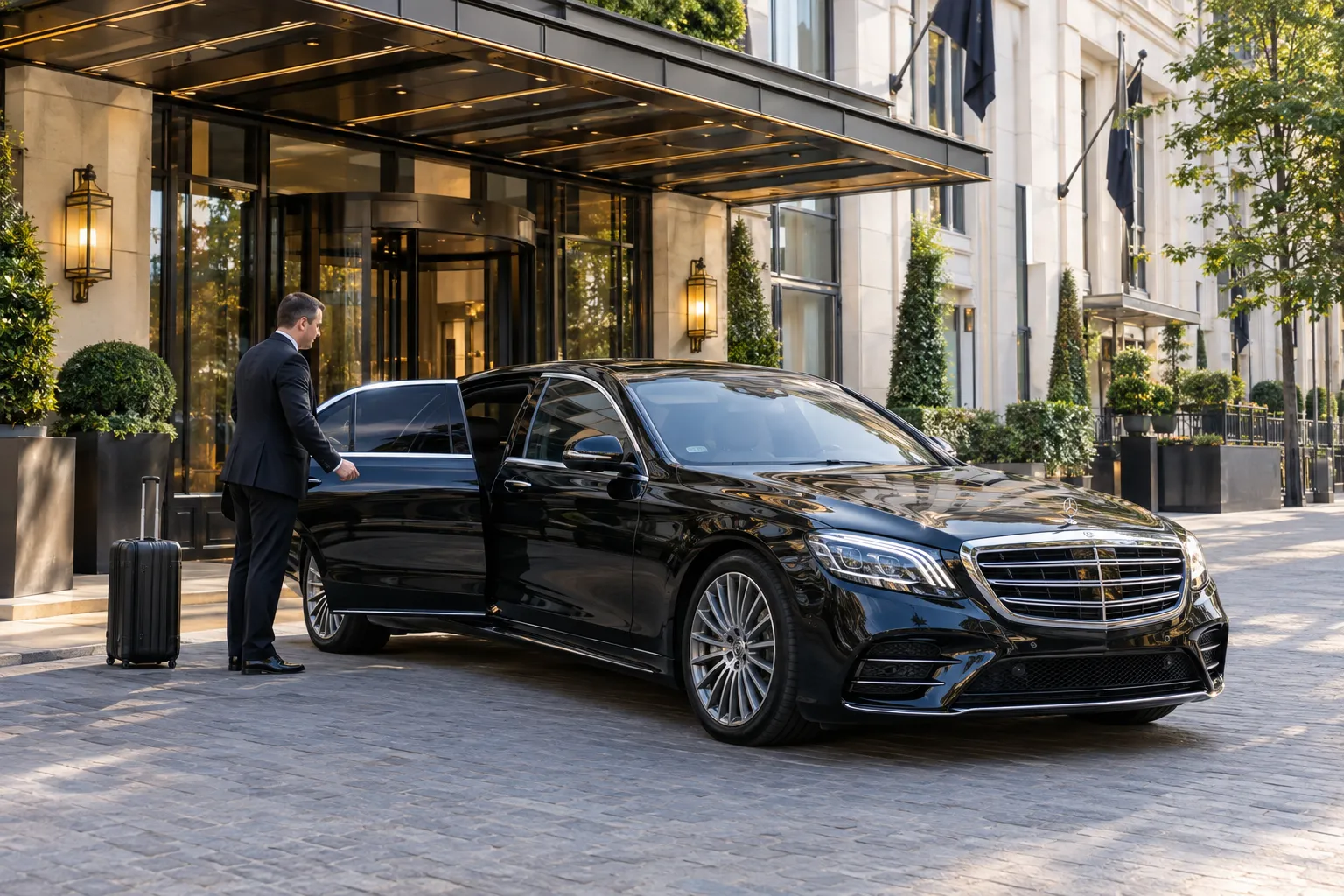
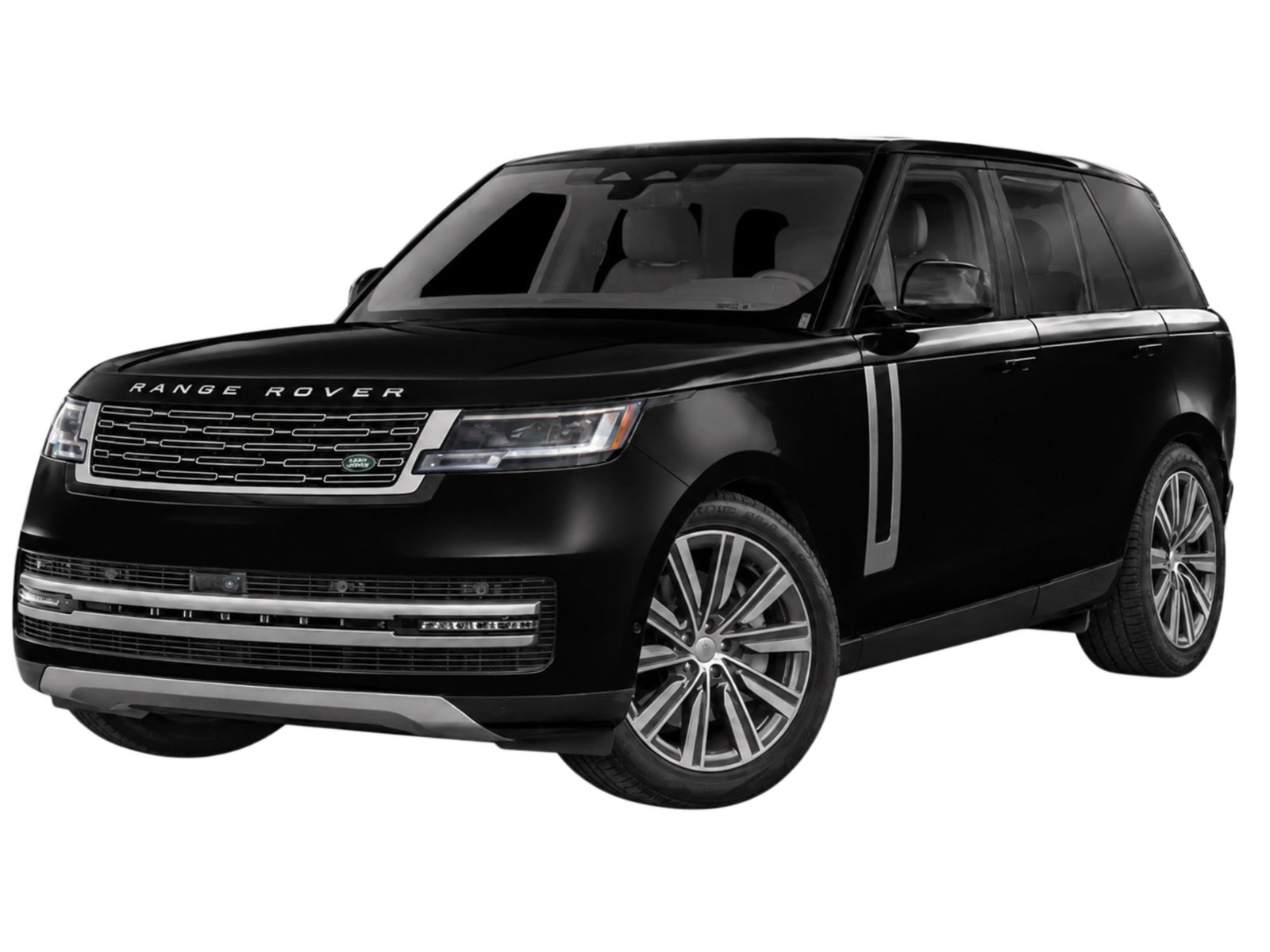
For the E-Class, S-Class and Range Rover, the listed capacity is up to three passengers with two large and two cabin bags. The V-Class is listed for up to six passengers and up to six large and six cabin bags. These figures make the V-Class the clearest option when a larger party needs to travel together or when the journey involves more luggage. The saloons and Range Rover may suit a smaller party with the stated bag allowance; the best choice among them depends on the cabin preference and the journey, not simply the vehicle’s name.
Compare your actual needs against the limits before confirming. If one passenger has a large instrument, folding mobility aid, pushchair or other unusually shaped item, describe its approximate size and whether it can be folded. The published bag counts do not explain how every unusual item will fit, so ask the company to confirm the proposed vehicle rather than assuming a standard bag allowance covers it. The same applies if you are close to the listed passenger or luggage maximum: confirmation helps avoid selecting a vehicle that fits the headcount but not the complete load.
There is a trade-off between travelling together and selecting a smaller vehicle for a smaller party. A V-Class can accommodate a group of up to six with a higher stated luggage allowance, while the saloons and Range Rover have lower stated passenger and bag limits. Conversely, choosing a vehicle simply because it has more seats is unnecessary if your priority is a particular cabin style and your party and bags fit another option. Give the provider the full passenger-and-luggage picture, then choose from the vehicle that is confirmed for that combination.
What to confirm when planning the transfer itinerary
A useful hotel-transfer itinerary distinguishes the place you are leaving from the place you are going, and identifies the exact pickup and destination addresses. “Hotel to airport” is not always enough detail to remove ambiguity: include the hotel name and street address, the relevant airport, and any terminal information you already know. For a station journey, name the station and include the train details if you want arrival information considered. Clear details give the team a basis for matching the vehicle and chauffeur to the requested journey.
For a hotel pickup, provide the time you want the chauffeur to collect you, not just the time you expect to reach the airport or station. The journey time between the two locations is not stated here, so do not assume that a general estimate will guarantee arrival before a flight or train. Allow for your own check-in or boarding plans, and ask for guidance about the pickup schedule if you are uncertain. The provider can confirm the itinerary and pricing, but your booking details should make your intended arrival time clear.
When asking for a quote, send the travel date, pickup time, full pickup and drop-off addresses, passenger count, bag count and preferred vehicle, if you have one. Include a flight or train number where applicable so arrival monitoring can be considered. Tell the team about any requested stop or unusual handling need before confirmation rather than treating it as an automatic part of the transfer. Confirm that the itinerary reflects the agreed details, particularly if the pickup is from a large hotel, a venue with more than one entrance or a complex destination.
If plans change after the itinerary has been agreed, notify the company promptly. This is particularly important when the pickup address, passenger count, luggage or arrival details change, because each can affect the practical vehicle assignment. For airport pickups, flight monitoring is described as part of the service, but it is still sensible to provide accurate flight information and communicate other changes directly. Do not rely on a vehicle or itinerary adjustment until it has been confirmed.
Planning a clear pickup and handoff
The pickup arrangement differs according to where the journey begins. For an airport or station arrival, the service describes a meet and greet, with the chauffeur assisting after arrival and helping with luggage. For a hotel pickup, the practical priority is to agree the hotel address, collection time and any useful instructions for finding the right entrance or meeting point. Providing these details in advance makes it easier to understand where the handover is intended to happen.
At a busy transport hub, make sure the booking identifies the correct airport or station and provide the flight or train number where applicable. If you have a preference for a meeting arrangement, such as a name on a sign, raise it when booking; signage is an additional request mentioned in the booking information, not something to assume without confirmation. Keep your phone available and use the contact details supplied for the booking if you need to clarify an arrival or meeting point.
At a hotel, tell the team whether the pickup is from the main entrance or another agreed location. If the hotel has multiple buildings or an access point that is not obvious, explain that when sending the address. The included hotel waiting time is 15 minutes, so have your party and bags ready around the agreed pickup time rather than relying on the allowance as extra scheduled preparation time. Airport pickups have a different stated waiting allowance of 60 minutes; do not apply that airport figure to a hotel collection.
A clear handoff matters at the end of the transfer too. Confirm the exact destination address and any relevant entrance or drop-off detail before the journey. If someone else is meeting the passenger at the destination, share the plan with them independently; the service description does not establish that the chauffeur will coordinate with a third party unless this is arranged. Separating the pickup instructions from the destination instructions reduces the chance of confusion when the trip has several people or locations involved.
How to request arrangements for particular needs
If a passenger has a specific requirement, describe it plainly during the enquiry and ask whether it can be accommodated before you confirm the booking. This is more useful than relying on a broad request such as “make it suitable for the family.” Relevant details might include the need for extra help handling luggage, a preference for a particular cabin environment, or an item that needs special handling. The service information invites passengers to share special requests, but it does not establish that every request or equipment type is automatically available.
For a family or group, check both seating and luggage before settling on a vehicle. The V-Class is listed for up to six passengers and a larger bag allowance than the other listed vehicles, but the group should still give the actual case count and explain bulky items. If you need a child seat or another specific fitting, mention it when enquiring and obtain confirmation. A request in the booking stage is not confirmation that an item is included or can be supplied.
Passengers who value a quieter journey or a particular type of cabin can describe that preference when choosing between the executive saloons, V-Class and Range Rover. The E-Class and S-Class are presented as executive saloons, the V-Class as a group-oriented MPV, and the Range Rover as a premium SUV. These are useful distinctions for deciding what to ask about, but preferences should be weighed against the actual passenger and baggage requirements first.
For additional luggage handling, meet-and-greet signage or another personalised arrangement, state what you need and ask the team to confirm the details. Keep the confirmed answer with your itinerary so the people travelling know what has been agreed. If the request changes later, contact the provider rather than assuming that the earlier confirmation still covers the new requirement. This approach makes clear which elements are standard service features and which depend on an individual arrangement.
Coordinating a transfer for a group or another traveller
When several people are travelling together, nominate one person to send the enquiry and check the final itinerary with the group. That person can gather the full passenger count, luggage details, collection address, destination and any requests before contacting the provider. This avoids sending separate, incomplete versions of the same journey and helps the team assess the vehicle against the whole party rather than one passenger’s information.
Before confirming, compare the agreed vehicle with the group’s actual plans. A party of up to six may consider the V-Class, but the stated capacity alone does not establish that every combination of people and belongings will fit. Send an accurate bag count, including cabin bags and any bulky pieces. If passengers are joining at different places or leaving at different destinations, list each location and ask whether the proposed itinerary can be arranged as requested; do not assume that a single pickup-and-drop-off booking includes extra stops.
Share the final pickup time and meeting instructions with all travellers, especially if the hotel or transport hub has several possible entrances. Make sure each person understands who is carrying the booking details and who will contact the provider if plans change. For a group leaving a hotel, organise bags and passengers before the scheduled collection so that the included 15 minutes of hotel waiting time is not treated as a substitute for coordinating the party.
The same preparation helps when one person is booking for a guest, colleague or family member. Provide the traveller’s contact details or other communication instructions as requested during booking, and make sure the person travelling knows the vehicle description and agreed meeting plan. If a third party is arranging payment or receiving the quote, keep the operational details available to the traveller as well. A well-shared itinerary can make the pickup clearer without assuming that the chauffeur has information that was never included in the booking.
Preparing separately for arrivals and departures
Arrival and departure transfers need different information. For a journey beginning at an airport, provide the flight number so monitoring can be used to follow the arrival, and confirm the airport and destination address. The service information describes meet and greet, luggage assistance and 60 minutes of complimentary waiting for airport pickups. For a hotel collection, provide the hotel pickup address and the time you need to leave; the stated complimentary waiting allowance for hotel pickups is 15 minutes.
For a station arrival, include the train number and station in the enquiry if you want arrival monitoring considered. The booking guidance refers to flight or train details for monitoring, while the verified airport inclusions specifically identify flight monitoring. Confirm the arrangement for your particular station journey rather than assuming that every airport feature applies identically. This distinction is especially useful when arranging collection after a train journey or when a group is arriving separately.
Before travel, check that the confirmed itinerary still matches the latest travel information. If the flight or train details, hotel address, passenger count or timing has changed, notify the provider promptly. Monitoring can help with arrival changes, but it does not replace providing accurate booking details or asking for confirmation if the journey itself has changed. Keep the agreed contact and meeting information accessible on the day so the traveller can follow the confirmed plan.
On the return journey, work backwards from the time you need to reach the airport or station, while recognising that no fixed journey duration is specified here. Confirm the pickup time with the provider and allow for your own check-in, security or boarding arrangements. This helps distinguish the chauffeur’s collection schedule from the separate time needed for the traveller’s onward travel preparations.
When the journey needs more than one stop
If passengers need to join at different places, or the group has more than one destination, list every location in the enquiry and explain the order you have in mind. A standard hotel transfer description does not confirm that extra collections or drop-offs are included, so ask whether the proposed route can be arranged before booking.
This check also helps the provider understand how the passenger count may change along the journey and whether the vehicle remains appropriate for the whole trip. Confirm the final sequence of stops and any agreed arrangements in the itinerary, then share those details with everyone travelling. Avoid assuming that a brief stop can be added on the day; raise it in advance so its feasibility can be confirmed.
What to keep within reach during the ride
Keep anything you expect to use during the ride—such as a phone or charging cable—easy to reach rather than buried in luggage. The vehicles include phone chargers, bottled water, tissues, wipes and an umbrella, but you may still want to bring personal items or equipment that suit your needs. Do not assume a particular charger connection will suit every device; check what you need before setting off.
If a bag contains something fragile or especially important, tell the chauffeur when loading so it can be handled with care and kept accessible if appropriate. At the same time, keep the main luggage together and make sure it all fits the confirmed vehicle’s stated allowance. A little organisation can make settling in easier without delaying departure.
Service availability and vehicles are subject to booking confirmation. Waiting times apply as specified. Fleet and chauffeur standards maintained consistently.