Antwerp’s collecting culture is not a single market or category. It is an invitation to move between antique shops, brocante and vintage browsing, themed markets, bookshops and museum collections, noticing how objects tell different stories in each setting.
Article overview
Where to begin
Start with Kloosterstraat for antiques, vintage and second-hand browsing, as identified by Visit Antwerpen.
Add Wolstraat if antiquarian books and galleries interest you, then visit the Museum Plantin-Moretus for a collection-based perspective on printed culture. Check current shop and museum arrangements before setting out.
Antiques and vintage
Visit Antwerpen identifies Kloosterstraat as a shopping area for antiques, vintage and second-hand shops.
Books and galleries
Visit Antwerpen points to antiquarian bookshops and galleries on Wolstraat.
Museum collection
The Museum Plantin-Moretus collection page lists almost 40,000 printed works, 69,000 single-sheet prints and approximately 650 manuscripts.
A city read through objects
Antiques and collecting culture in Antwerp
The pleasure of collecting in Antwerp is not limited to finding an object to buy. It lies in moving between settings that give objects different meanings: a shop presents things for sale, a bookshop invites close attention to printed material, and a museum connects individual objects with a wider history.
Three ways of encountering the past
In a shop, condition, price and the seller’s account are part of the decision. A market or second-hand shop may bring together varied objects without offering the same specialist context. A museum, by contrast, selects and interprets objects as part of a collection. Keeping these settings distinct helps make a visit more rewarding: browsing can prompt questions, while collections can provide a framework for thinking about use, production and preservation.
Curiosity with a critical eye
An object’s age is only one part of its interest. Material, workmanship, design, evidence of use and documented history may matter as much. Terms such as antique, vintage, brocante and second-hand are used in different ways by sellers; they are useful starting points for conversation, not a substitute for asking what is known about a particular piece.
Where to browse
Kloosterstraat and Antwerp’s specialist streets
The city’s official visitor information gives a practical orientation for a first walk, while leaving room for the unpredictability that makes browsing worthwhile.
Kloosterstraat
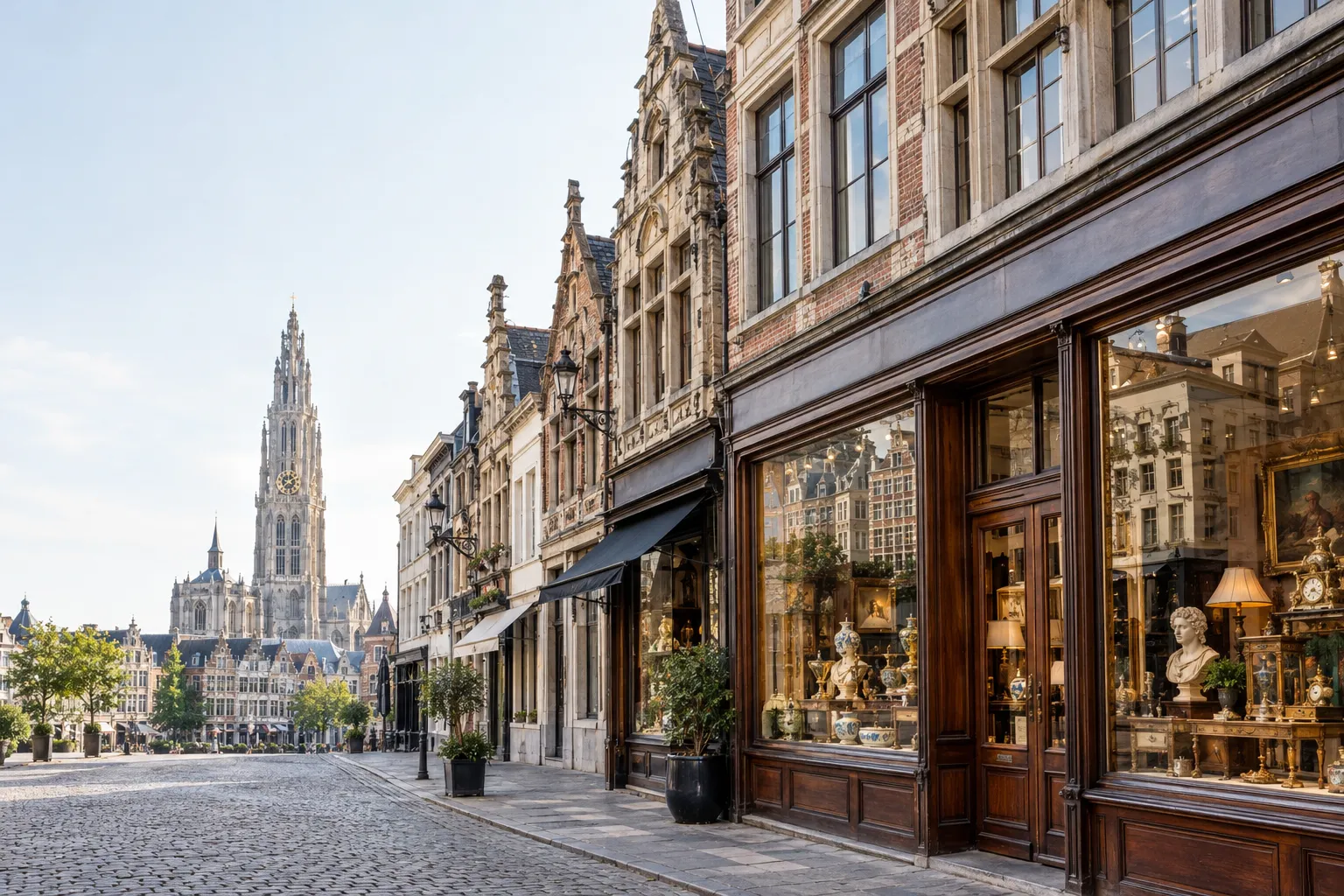
Visit Antwerpen describes Kloosterstraat as a long-established street for antiques, vintage and second-hand shops. It is a useful place to start if you want to compare different kinds of objects and shop displays on foot. The listing does not guarantee that a particular item will be in stock, or establish individual shops’ current opening hours; check directly before making a special journey.
Wolstraat and printed material
Visit Antwerpen points readers to antiquarian bookshops and galleries on Wolstraat. This offers a different collecting emphasis from the broader browsing associated with Kloosterstraat: printed material rewards close inspection of edition, condition and any information about a book’s history. Do not assume that a specific title or item is available without checking with the bookseller.
Lange Koepoortstraat
The same visitor guide notes independent and second-hand shops along Lange Koepoortstraat. It can extend a walk for visitors interested in browsing beyond one category. Treat it as an area to explore rather than a promise of a particular kind of stock.
A flexible walking approach
Choose a few streets according to your interest, but leave time to pause and compare. Shop inventories and opening arrangements are not fixed by a district description. If a particular dealer, object or opening day matters to your plans, confirm it with the shop rather than relying on a general area guide.
Books, printing and public collections
The Museum Plantin-Moretus and Antwerp’s printed heritage
For book collectors and readers interested in the material history of print, the Museum Plantin-Moretus provides a collection-based counterpoint to browsing in shops.
A collection larger than any single display
The museum’s rare-books collection page lists almost 40,000 printed works, 69,000 single-sheet prints and approximately 650 manuscripts. These figures describe the collection, not what will necessarily be on view during a particular visit. They indicate why a museum can broaden the questions raised by book collecting: how printed works were made, preserved and brought into collections.
Allow time and check practical details
The Museum Plantin-Moretus FAQ estimates an average visit of about 90 minutes. It says bags are not allowed inside and that locker space is limited, and advises booking online to guarantee a place. These arrangements may change, so check the museum’s current visitor information before travelling. If your interest is in a particular item or research access rather than the general visit, contact the museum to establish what is available.
Separate collecting from museum access
A museum collection is not a shop catalogue, and its contents should not be assumed to be on public display. For visitors, the value is often contextual: seeing printed objects interpreted as part of a wider history can make the questions asked in a bookshop more precise.
Making a considered purchase
Questions to ask when an object catches your attention
A little patience can help distinguish an object’s appeal from what can actually be established about it. Whether you are looking at a book, decorative object or piece of furniture, ask clear questions and keep a record of the answers.
Look closely before deciding
Inspect the object in the light available and ask the seller to explain any features you cannot assess yourself. Note what is directly visible, what the seller reports and what remains uncertain.
Check condition, repairs, missing parts and signs of wear.
Ask for measurements and consider whether the object can be used, displayed or stored as you intend.
For books and printed material, look at completeness, binding, annotations and any condition issues that matter to you.
Ask about history and evidence
A compelling account can add interest, but it is not the same as documentation. Ask whether information about an object’s origin or ownership is supported by records, and whether any description is an informed opinion rather than a verified fact.
Find out what provenance information, receipts or other documentation is available.
Clarify which parts of the description are known and which are uncertain.
Keep notes if you are comparing similar objects in several shops.
Consider the practicalities
Before committing to a larger or fragile purchase, consider how it will be carried, transported and cared for. If you are travelling, establish the item’s dimensions and weight and work out suitable arrangements before purchase. Do not assume a shop can arrange delivery unless it confirms this directly.
Planning a visit
Build an object-focused day without turning it into a checklist
A useful plan combines browsing with time to look carefully. The best sequence depends on your interests and the current opening arrangements of the places you want to visit.
Choose a collecting interest
Decide whether you are most drawn to antiques, vintage and second-hand objects, books or printed material. A focus gives the day shape without ruling out unexpected discoveries.
Check what is open
Use Visit Antwerpen’s shopping-zone information to orient yourself, then verify details with individual shops. The guide describes districts and shop types, but does not confirm a specific shop’s current stock or opening hours.
Add a museum perspective if it suits your interests
The Museum Plantin-Moretus can add context for visitors interested in books and print. Check its current visitor information, allow time for the visit and remember that collection totals do not mean every item is on display.
Leave room to compare and reconsider
A flexible day makes it easier to revisit a shop, compare an object with another find or decide not to buy. Collecting can be as much about learning what you value as about taking something home.
A considered perspective
Let Antwerp’s different collections of objects speak in their own ways
Kloosterstraat and other shopping streets offer the possibility of discovery; antiquarian bookselling invites a more focused search; museum collections preserve and interpret objects beyond the logic of a purchase. Together, these experiences make Antwerp a place to look, compare and ask better questions.
The value of looking closely
A successful visit need not be measured by a purchase or by the number of places covered. It may leave you with a carefully chosen object, a better understanding of its condition and history, or simply a clearer sense of how objects acquire meaning through use, trade and preservation. Keep the distinctions between documented history and suggestion in view, and let curiosity set the pace.
Questions answered
Antiques and collecting culture in Antwerp FAQs
Where can I browse for antiques in Antwerp?
Visit Antwerpen identifies Kloosterstraat as a street for antiques, vintage and second-hand shops. Its shopping guide also points to antiquarian bookshops and galleries on Wolstraat and independent and second-hand shops along Lange Koepoortstraat. Check individual shops for current stock and opening arrangements.
Are antique, vintage and second-hand the same thing?
No. These terms describe different aspects of an object and are used in varied ways by sellers. Ask how a seller is using the term and what evidence supports claims about an object’s age, history or condition.
What can book collectors see at the Museum Plantin-Moretus?
The museum’s collection page lists almost 40,000 printed works, 69,000 single-sheet prints and approximately 650 manuscripts. Those totals describe the collection as a whole; they do not establish that a particular item will be on display.
How long should I allow for the Museum Plantin-Moretus?
The museum FAQ estimates an average visit of about 90 minutes. Check its current visitor information before visiting, as practical arrangements can change.
How can I check whether a particular antique shop or market is open?
Confirm opening arrangements directly with the shop or check current official city information for market details. A district guide does not confirm a particular shop’s hours, stock or a market’s current schedule.
Explore Antwerp’s streets, shops and collections at your own pace, allowing time to look closely and verify current opening arrangements. Related information and services: Design Museum Chauffeur, City to City Chauffeurs.
Essential cookies keep the site and booking form working. Choose whether to allow Google Analytics or Google Ads measurement. We remember your choices for up to 180 days.

 London Direct Chauffeurs