Culture & collecting

Antiques and collecting culture in Geneva

From the open-air stalls of Plainpalais to Geneva’s watchmaking collections and museums, the city invites a thoughtful kind of collecting. Discover how to browse, learn and assess objects with care.

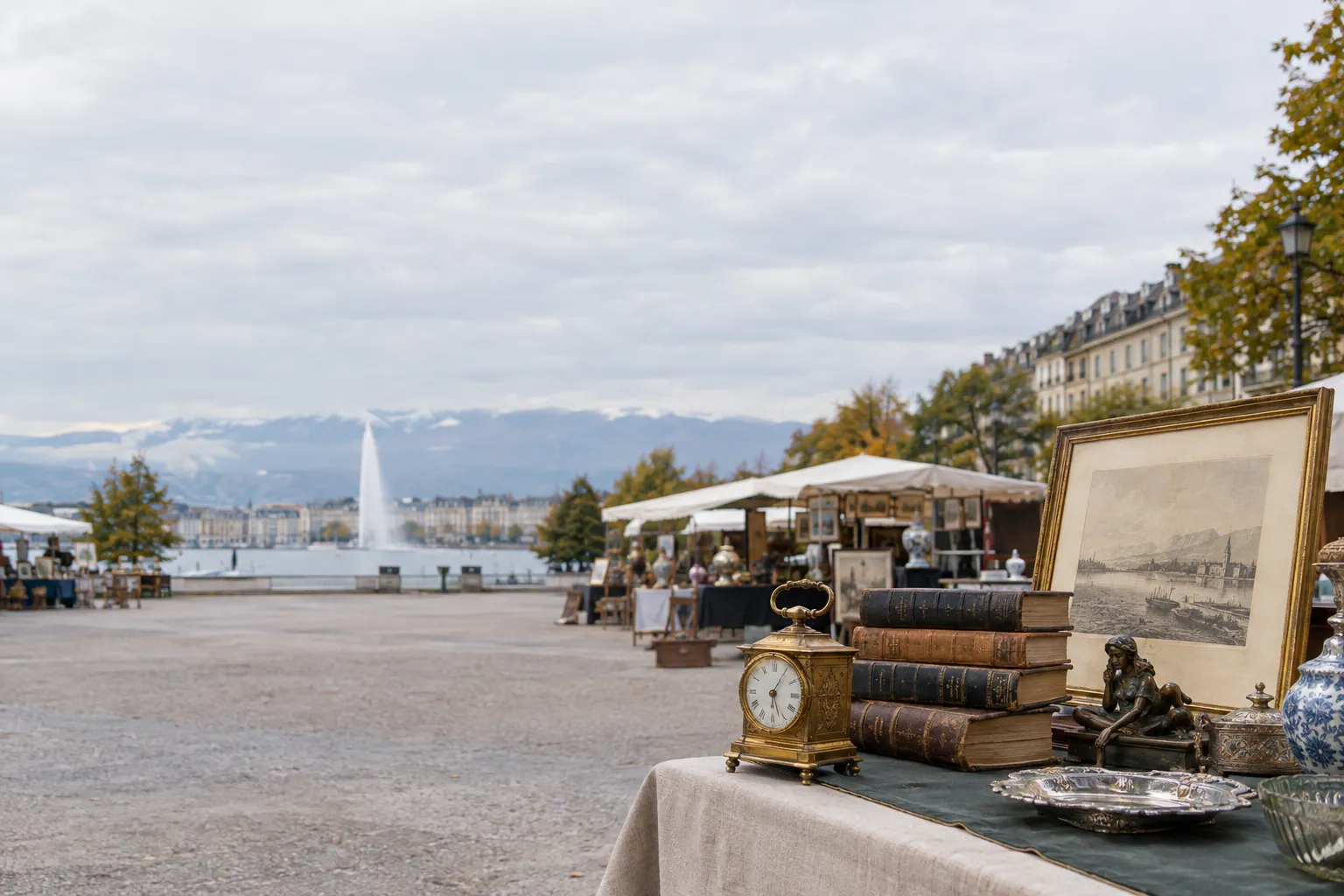
Antique books, a brass clock and decorative objects arranged at a flea-market stall in Geneva’s Plainpalais.
Article overview

Antiques and collecting in Geneva

Plainpalais is a useful place to browse antiques, books, jewellery and decorative objects; check Geneva Tourism’s official listing for current market days.

The Patek Philippe Museum and MAH provide historical context for horology and wider collections including furniture, textiles, jewellery and archaeology.

Plainpalais market days listed by Geneva Tourism; verify before visiting
Wednesdays, Saturdays and the first Sunday of the month
The Patek Philippe Museum’s collection includes antique Genevan, Swiss and European watches and enamels
Watches, automata and related objects
Examples of subjects represented in MAH’s collections
Archaeology, furniture, textiles and jewellery
Geneva Tourism’s description of Le Cabinotier
Antique boutique and small watchmaking-history museum
A collector’s guide

From market finds to museum collections

Geneva’s antiques culture rewards a measured kind of curiosity. At Plainpalais, browsing is open-ended and tactile; in its museums, objects are arranged to illuminate craftsmanship, history and taste. A collector can move between the two, using each setting to ask better questions about age, condition, provenance and meaning. This guide follows that thread from market stalls to horology and broader museum collections, with practical advice for planning a thoughtful visit.

Geneva’s collecting culture, beyond the purchase

Geneva’s collecting culture is not confined to a single district or category. It moves between the chance discoveries of a public market, the deliberate order of museum galleries and the specialist knowledge embodied in the city’s watchmaking history. That variety gives a visitor more than a shopping itinerary: it offers a way to understand how objects acquire meaning through workmanship, use, provenance and memory.

The most useful approach is to treat the city as a place to look and learn, rather than assuming every encounter will produce a purchase. At Plainpalais, one can scan stalls and compare objects in an informal setting. In museums, collections provide context: a watch becomes part of a history of precision, while furniture, jewellery or archaeological objects reveal changing tastes and social life. A specialist shop can add a closer view of a particular field.

For the collector, the pleasure lies in moving between these settings. The market encourages curiosity; the museum supplies perspective; specialist knowledge helps refine judgement. Together, they show why Geneva’s antiques culture is best understood as a conversation between everyday commerce and long-term preservation.

Plainpalais: browsing with a collector’s eye

The market at Plainpalais is a practical entry point for visitors interested in antiques and collecting. Geneva Tourism describes a broad mix that includes antiques, books, jewellery and decorative objects, alongside other second-hand and vintage finds. Such variety is part of the appeal: a collector may arrive with a defined interest and still encounter objects outside it, while a first-time browser can use the stalls to discover which materials, periods or forms draw the eye.

A market is also a lesson in comparison. Similar-looking pieces can differ in age, construction, condition and context. Ask what the seller knows about an object, but regard a verbal account as a starting point rather than independent proof. Examine repairs, wear, joins, marks and materials. For higher-value or specialist purchases, seek written documentation and an independent opinion where appropriate.

The atmosphere is more informal than a museum, but the same habits of attention are useful. Look slowly, take notes and photograph details only when permitted. If an object interests you, compare it with others before deciding. The aim is not to turn browsing into a checklist; it is to develop a more exact eye.

  • Treat an object’s story as a claim to investigate, not a substitute for evidence.
  • Check condition closely, including repairs, missing parts and signs of alteration.
  • For significant purchases, ask about documentation, returns and any applicable export or shipping arrangements directly with the seller.

Planning a visit to the Plainpalais flea market

The official Geneva Tourism listing identifies the flea market of Plainpalais as taking place on Wednesdays, Saturdays and the first Sunday of the month. This recurring pattern is useful for planning, but it should not be treated as a guarantee that a particular market will proceed unchanged. Weather, local arrangements or special circumstances can affect outdoor activity, so check the official listing close to the intended visit.

Build a flexible visit rather than trying to cover every stall. Arrive with enough time to browse without rushing, and carry a short list of interests rather than a rigid purchase target. Small objects may be easier to transport, but even a compact find deserves consideration of condition, authenticity and provenance. For larger items, clarify collection, delivery and export questions with the seller before agreeing to buy.

Plainpalais works well as one part of a cultural day. Pair market browsing with a museum visit or time in the Old Town, leaving room for a pause to compare notes. If a particular museum or shop is central to the plan, verify its opening arrangements independently; market hours do not determine museum access. The official Geneva Tourism market page is the most appropriate place to confirm current market details before setting out.

  • Check the official Geneva Tourism market listing shortly before your visit.
  • Keep purchases and transport practical, especially for fragile or bulky objects.
  • Allow time to compare similar items rather than buying at the first stall.

Horology and the Patek Philippe Museum

Geneva’s association with watchmaking gives horology a distinctive place in its collecting landscape. The Patek Philippe Museum presents a collection of watches, automata and related objects, including antique Genevan, Swiss and European watches and enamels. Its displays make it possible to consider timepieces not only as instruments, but also as products of design, skilled making and changing ideas of precision.

For a visitor interested in collecting, the museum offers a useful counterpoint to the market. A display can show how materials, decoration and mechanisms relate to particular periods and traditions. That context can sharpen questions asked elsewhere: Is a watch’s construction consistent with the description? What evidence supports its date or attribution? Has it been altered or restored? A museum visit cannot authenticate an individual market purchase, but it can deepen visual literacy.

The Patek Philippe Museum publishes visit information on its official website, including current opening arrangements and visitor options. Check that information before travelling, as arrangements may change. Approach the collection with curiosity rather than treating it as a catalogue of investment prospects; its value as a cultural resource is broader than the price of any single object.

  • Use museum displays to learn about form, decoration and historical context.
  • Do not treat visual resemblance to a museum object as proof of authenticity.
  • Confirm visiting arrangements on the museum’s official site before going.

MAH and the wider history of objects

The Museum of Art and History, known as MAH, offers a wider frame for understanding collecting in Geneva. Its collections span subjects that include archaeology, furniture, textiles and jewellery, as well as watchmaking-related objects. The breadth matters: collecting is not only about rare or expensive things. It is also about how objects are selected, preserved and interpreted across different periods and forms of life.

A visit can encourage useful comparisons. Furniture reveals changing ideas of domestic comfort and craftsmanship; jewellery brings together materials, adornment and personal significance; archaeological objects place daily life within much longer histories. These are not isolated categories. A collector who studies how an object was made, used and preserved is also asking questions familiar to museums: what evidence survives, what context has been lost, and how should the object be described?

The museum’s programme and access information are subject to change. Consult MAH’s official visitor information before planning around a particular exhibition or collection area. For a focused visit, choose one theme in advance, then leave room for objects that complicate or enrich it. This is often more rewarding than trying to see everything at once.

  • Choose a theme such as furniture, jewellery, archaeology or decorative arts before entering.
  • Read collection labels for context, while noting that an object’s full history may be more complex.
  • Check the museum’s official pages for current access and programme information.

Specialist knowledge and Geneva keepsakes

A specialist shop can bring collecting down to a more intimate scale. Geneva Tourism’s listing for Le Cabinotier describes an antique boutique with a small museum devoted to watchmaking history and vintage Geneva postcards. This combination connects the city’s commercial life with local memory: a postcard records an image of place, while an antique object carries evidence of use, taste and workmanship.

Specialist settings are most valuable when they invite precise questions. Ask how an item is dated, what is known about its past, and whether restoration or repair has taken place. Look for consistency between the object and its description. If the answer is uncertain, that uncertainty should be stated plainly. A careful seller’s explanation can be useful, but it does not remove the buyer’s responsibility to assess the item and the terms of sale.

A visit to a named shop should be planned as a visit to an independent business, not as guaranteed access to a museum or private collection. Verify current opening information directly through the official listing or the shop’s own channels. The point is not to chase a prescribed set of stops; it is to see how different kinds of collecting knowledge operate in the city.

  • Treat specialist conversation as a source of leads, then verify important claims.
  • Ask about condition, repairs and documentation before purchase.
  • Confirm current opening information directly before making a dedicated visit.

Practical perspective

Make the visit informed and unhurried

A collecting visit involves more than choosing where to browse. It also asks how to assess an object responsibly, how to plan around current opening arrangements and how to leave enough time for comparison. These habits help turn a day in Geneva into an informed cultural experience rather than a hurried search for a purchase.

Buying thoughtfully: condition, provenance and logistics

Before buying, pause to separate what you can observe from what you have been told. Record the seller’s description, inspect the object, and ask whether supporting documents are available. For a significant purchase, consider an independent specialist opinion. Provenance, condition and authenticity can have legal, financial and ethical implications; requirements may vary by object and destination, so seek qualified advice where needed.

International visitors should also establish in advance whether an object can be transported or exported and what documentation may apply. Do not assume that a seller’s willingness to sell answers customs or export questions. Fragile items need suitable packing, and bulky purchases require a clear plan for collection or delivery. Confirm these details with the seller and relevant authorities before committing.

  • Write down the object’s description and any provenance information provided.
  • Ask explicitly about restoration, damage, missing parts and sale terms.
  • Check relevant transport, export and import requirements before purchase.

A considered day among Geneva’s collections

The most satisfying Geneva collecting itinerary leaves room for reflection. Begin with a market or museum according to your main interest, then use the second setting to test and broaden what you have noticed. A morning among objects at Plainpalais might lead to a museum visit focused on decorative arts; an interest in watches can be deepened at the Patek Philippe Museum and then carried into questions about historic objects elsewhere in the city.

Keep the day realistic. Check each venue’s current opening details, allow time between stops and avoid making a purchase simply because the visit is nearly over. Note the objects that held your attention and why: material, workmanship, imagery, a known history or a sense of connection to Geneva. That record can be more useful than an impulsive acquisition.

For travellers arriving in Geneva from the United Kingdom, London Direct Chauffeurs Ltd provides pre-booked transport services across Europe, including Geneva, according to its service-area information. This may be relevant when planning the ground journey, but it does not imply access to market stalls, museum collections or special venue arrangements. Keep practical transport planning separate from the independent research needed before purchasing an antique.

  • Choose one primary focus for the day and let other stops support it.
  • Verify opening information for every museum or shop directly before travelling.
  • Leave time to compare, reflect and make careful decisions.

The lasting pleasure of looking carefully

Antiques and collecting in Geneva are most rewarding when approached as a practice of attention. The market offers the uncertainty and variety of discovery; museums provide historical frameworks; specialist settings bring concentrated knowledge to individual objects. None can replace the others, and none makes every purchase a sound one. Their value lies in the different questions they teach visitors to ask.

Look closely at construction and condition. Listen to an object’s story, then seek evidence. Think about what you want to collect and why, but remain open to the unexpected. In Geneva, a useful day may end with no purchase at all, yet with a clearer understanding of watchmaking, decorative arts or the histories held in ordinary things. That is a meaningful form of collecting culture: not simply owning objects, but learning how to see them.

At a glance

A collector’s overview

Four ideas frame a rewarding visit: start with a clear interest, use more than one setting to build context, verify practical details and approach purchases with care.

A culture shaped by curiosity

Geneva’s antiques and collecting culture spans public-market browsing, specialist knowledge and institutional collections. Plainpalais is a starting point for varied objects; museums place watches, furniture, jewellery and other holdings in historical context. A careful visitor checks current access, assesses condition and provenance, and treats discovery as valuable even without a purchase.

The strongest itinerary is selective rather than exhaustive. Choose a theme, compare different settings and make time to reflect. Whether the interest is horology, decorative arts or the pleasure of finding an unexpected object, Geneva offers a way to connect collecting with the broader history of craftsmanship and everyday life.

A concise guide to collecting in Geneva

The Plainpalais flea market gives visitors a public setting to browse antiques and collectibles, while museum collections offer deeper historical context. The Patek Philippe Museum focuses attention on horology and related objects; MAH broadens the view to archaeology, furniture, textiles, jewellery and more. Check official sources for current schedules and opening arrangements, and verify an item’s condition and provenance before purchase.

Key facts

Four facts for planning

These details identify useful starting points. Access, schedules and individual business arrangements should be confirmed with official sources before a visit.

Plainpalais market days

Geneva Tourism lists the Plainpalais flea market on Wednesdays, Saturdays and the first Sunday of the month. Check the official listing for current arrangements before visiting.

A horological collection

The Patek Philippe Museum presents a collection of watches, automata and other objects, including antique Genevan, Swiss and European watches and enamels.

MAH collection range

MAH’s collections include archaeology, furniture, textiles, jewellery and watchmaking-related objects, offering a broad view of material culture.

A specialist stop

Geneva Tourism describes Le Cabinotier as an antique boutique with a small watchmaking-history museum and vintage Geneva postcards.

Conclusion

Collecting as a way of seeing Geneva

The best souvenir of a collecting visit may be a better eye: an understanding of how objects are made, used, preserved and interpreted. Geneva’s varied cultural settings make space for that kind of discovery.

A closing perspective

Geneva collecting culture rewards looking carefully: markets encourage discovery, museums provide context, and specialist knowledge helps make questions more precise. Plan around current official information and make decisions about purchases with evidence, not urgency.

Explore Geneva’s collections at your own pace

Let curiosity set the pace. A thoughtful visit can deepen your understanding of Geneva’s objects and traditions, whether or not you bring anything home.

Common questions

Antiques and collecting culture in Geneva: FAQs

These answers address the practical questions most likely to shape an antiques-focused visit. Verify time-sensitive information directly with the relevant venue.

What can visitors find at the Plainpalais flea market?

The Plainpalais flea market is a public market in Geneva known for antiques and a range of second-hand and collectible objects. Geneva Tourism currently lists it on Wednesdays, Saturdays and the first Sunday of the month; check the official page for current arrangements.

When is the Plainpalais flea market held?

Geneva Tourism lists the market on Wednesdays, Saturdays and the first Sunday of the month. Schedules can change, so confirm the details on the official market page before travelling.

Where can I learn about Geneva’s watchmaking heritage?

The Patek Philippe Museum presents watches, automata and related objects, including antique Genevan, Swiss and European watches and enamels. Its official visitor page provides current access information.

Which Geneva museum has collections beyond watches?

MAH’s collections cover a broad range of subjects, including archaeology, furniture, textiles, jewellery and watchmaking-related objects. Consult MAH directly for current visiting information and exhibitions.

What should I check before buying an antique in Geneva?

Inspect condition and ask about repairs, provenance, documentation and sale terms. For a significant purchase, seek independent specialist advice and check applicable transport or export requirements before committing.

Can I assume museums are open on market days?

No. Market browsing and museum visits are separate activities, with different schedules and arrangements. Confirm each place’s current information independently.

Questions answered

antiques and collecting in Geneva FAQs

What can visitors find at the Plainpalais flea market?

The Plainpalais flea market is a public market in Geneva known for antiques and a range of second-hand and collectible objects. Geneva Tourism currently lists it on Wednesdays, Saturdays and the first Sunday of the month; check the official page for current arrangements.

When is the Plainpalais flea market held?

Geneva Tourism lists the market on Wednesdays, Saturdays and the first Sunday of the month. Schedules can change, so confirm the details on the official market page before travelling.

Where can I learn about Geneva’s watchmaking heritage?

The Patek Philippe Museum presents watches, automata and related objects, including antique Genevan, Swiss and European watches and enamels. Its official visitor page provides current access information.

Which Geneva museum has collections beyond watches?

MAH’s collections cover a broad range of subjects, including archaeology, furniture, textiles, jewellery and watchmaking-related objects. Consult MAH directly for current visiting information and exhibitions.

What should I check before buying an antique in Geneva?

Inspect condition and ask about repairs, provenance, documentation and sale terms. For a significant purchase, seek independent specialist advice and check applicable transport or export requirements before committing.

Can I assume museums are open on market days?

No. Market browsing and museum visits are separate activities, with different schedules and arrangements. Confirm each place’s current information independently.

Sources and references

Final perspective

Let curiosity set the pace

Explore Geneva’s collections at your own pace Related information and services: Full Day Chauffeur Hire London, London Chauffeur Services, Design Museum Chauffeur.

Article reviewed and updated 31.10.2026.